
国外驾照换国内驾照流程新余
2026年科目一英文版题库共973题,你可以免费查看随机20题,完整版题库请添加微信购买:

The English version of the 2026 subject 1 question bank has a total of 973 questions. You can view the top 20 questions for free. Please add WeChat to purchase the complete version of the question bank.
1. When a motorized vehicle encounters the cut in by another vehicle in a roundabout, the driver may not evade as long as he has the right of way.
Answer: N
2. When a vehicle runs on an expressway, the driver may ascertain the speed according to his feeling.
Answer: N
3. You have the priviledged passing right of way at the intersection in this situation.
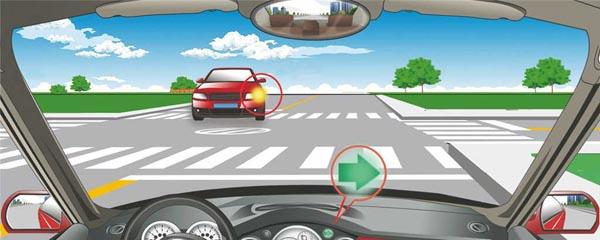
Answer: N
4. When a vehicle on the main road approaches a conjunction with a feeder road, the driver should ______ in order to prevent a collision with a vehicle that suddenly enters from the feeder road.
A. Maintain the normal speed
B. Reduce speed in advance, observe and drive with care
C. Honk and swiftly pass
D. Speed up in advance and pass
Answer: B
5. Driving in a dusty weather, it does not needed to turn on the head light, the contour light and the tail light.
Answer: N
6. A motorized vehicle can make a U turn on this road as long as it does not interfere other vehicles.
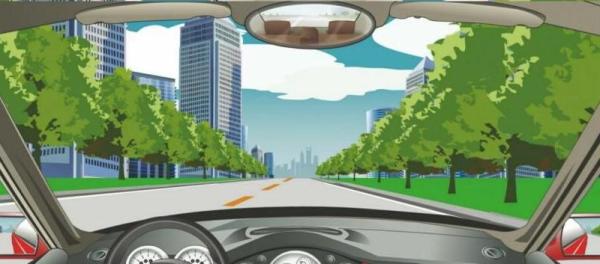
Answer: Y
7. The main impact of rainy weather on safe driving is _______.
A. The road is wet and slippery and the visibility is poor
B. The engine is prone to stop
C. The resistance to the vehicle increases
D. The electric equipment is prone to getting wet and causing short circuit
Answer: A
8. If a vehicle enters a left lane for overtaking but is unable to ensure a safe horizontal distance with the normally-running vehicle in front, the driver should ________.
A. Speed up and overtake
B. Overtake after running a distance in parallel
C. Give up overtaking
D. Overtake with care
Answer: C
9. When driving a vehicle through an inundated road with pedestrians on both sides, the driver should ________.
A. Speed up and pass
B. Go forward normally
C. Continuously honk
D. Reduce speed and go slowly
Answer: D
10. How to run through this intersection?
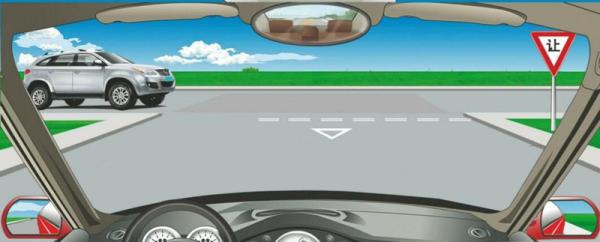
A. honk to let it yield
B. directly speed up to make a turn
C. reduce speed and turn slowly
D. yield the car coming from left
Answer: D
11. When a vehicle wades across the water, the driver should maintain a low speed, and _____ the brake pedal so as to restore the braking efficiency.
A. Continuously and strongly depress
B. Intermittently and strongly depress
C. Continuously and gently depress
D. Intermittently and gently depress
Answer: D
12. Driving a small passenger vehicle on the expressway, the minimum speed should not be less than 90 kilometers per hour.
Answer: N
13. When driving in a foggy day, the driver should turn on ______.
A. The reverse light
B. The low beam light
C. The fog light
D. The high beam light
Answer: C
14. What is the max speed on muddy road?
A. 15km/hr
B. 20km/hr
C. 40km/hr
D. 30km/hr
Answer: D
15. This motorized vehicle parked on the roadside has no illegal act.
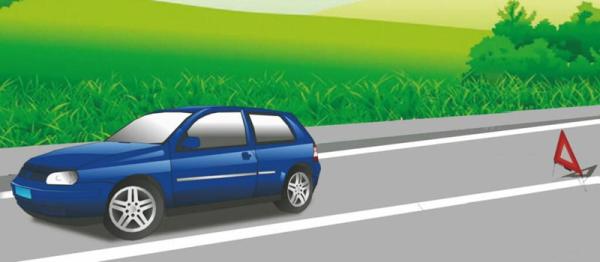
Answer: N
16. A driver can park the vehicle by borrowing the sidewalk if he cannot find the parking area.
Answer: N
17. Traffic markings are divided into indication, warning and prohibition.
Answer: Y
18. This traffic light means ______
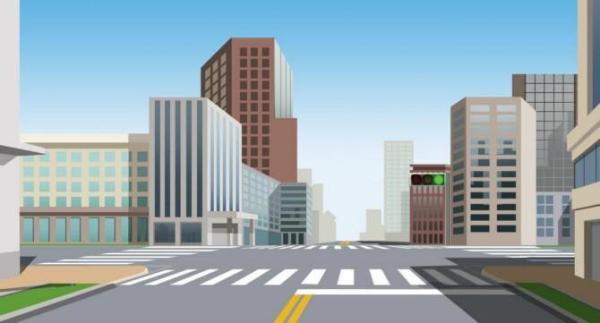
A. intersection warning
B. no passing
C. draw attention
D. allow to pass
Answer: D
19. When a vehicle has increased its speed to more than 60 kilometers per hour on the ramp of an expressway, it may directly enter the carriageway.
Answer: N
20. You can drive a motorized vehicle a short distance after drinking as long as it does not interfere the driving operation.
Answer: N
Previous: 河南外国人考中国驾照英语版
Next: 驾考科目一英文版题库